
In the book, “Village of Putiatynci, Chronicle of Cultural, Educational and Religious Life”, published by the Village of Putiatynci Committee of Rochester, New York, 1966, the following paragraph begins on page 69.
“Immigrants had to disembark at Ellis Island, and there pass a strict medical
examination. A person found to be in poor health was returned to Europe, without regard to the economic disaster this meant for him. Almost every one of the
immigrants, in order to raise the money for the boat fare, had to borrow, usually by mortgaging his land. Imagine the despair, when such an unfortunate could only have a glimpse of the Promised Land, without being able to
reach it!”
Key Processes in Galicia that allowed for mortgaging land:
- Legal Framework: Following 18th-century reforms, peasants in Galicia became legal subjects of Austria, firmly governed by Vienna, but with rights to manage their own land and allowing them to legally pledge it for loans.
- Mortgage Banks: Institutions were established, specializing in the issuance of long-term mortgage loans to peasants for farm improvements, purchasing more land, or other needs.
- Registration: Loans were formally registered, often in Austro-Hungarian, German-staffed imperial courts, which provided security for lenders.
- Currency: Transactions were conducted in Austro-Hungarian Kronen.
- Process: A borrower would apply to a bank, which would evaluate the property’s value, register the lien in the land book, and disperse funds, typically requiring repayment over a long term.
- Default: Defaulting on a land mortgage resulted in a swift, legally binding foreclosure proceeding in a regional court (Gerichtshof). The mortgaged land was typically auctioned off to recover the debt, as the Austrian civil code facilitated rapid execution of claims against non-payment.
- Foreclosure and Auction: The land was sold at public auction, and the proceeds were used to pay off the mortgagee (typically a bank or private lender), often leaving the original owner with little to nothing. The legal system prioritized protecting the creditor’s assets.
The Unfortunate 2%:
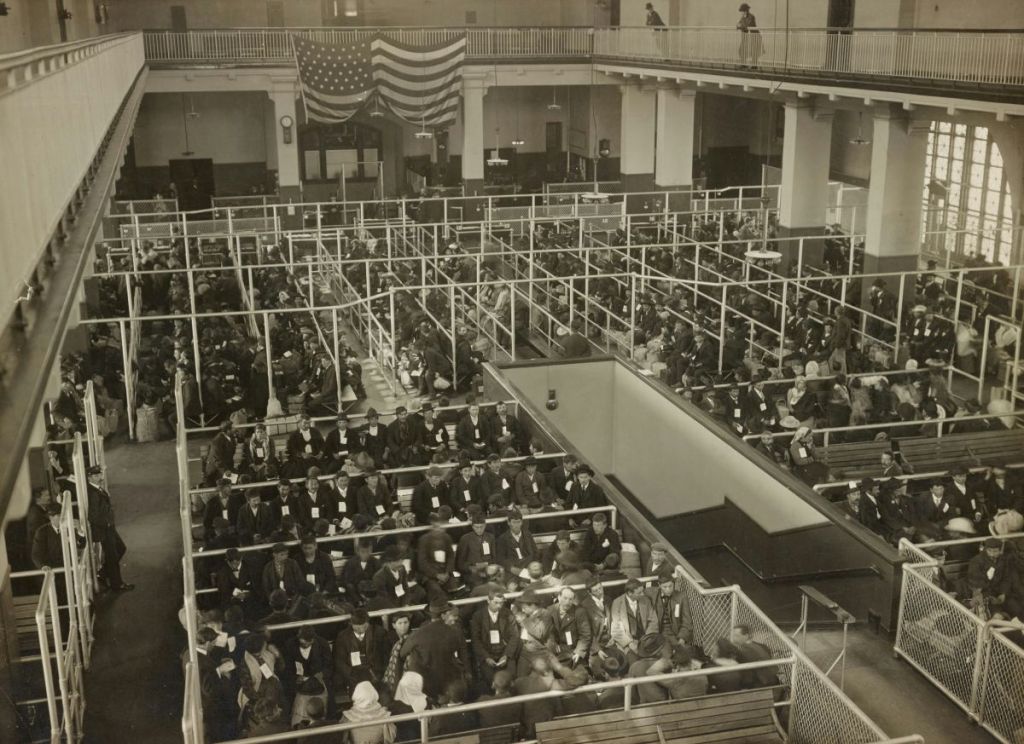
Before World War I, the medical examination at Ellis Island was a rapid, high-pressure “assembly line” process designed to identify immigrants who might be “undesirable” or “likely to become a public charge”. Roughly 20% of arrivals were detained for further inspection and about 2% of immigrants were ultimately denied entry into the United States.
The Inspection Process:
The medical screening began before immigrants even reached a doctor:
- The Staircase Test: As immigrants climbed the long flight of stairs to the Great Hall, Public Health Service (PHS) doctors watched from above for signs of labored breathing, limping, or heart trouble.
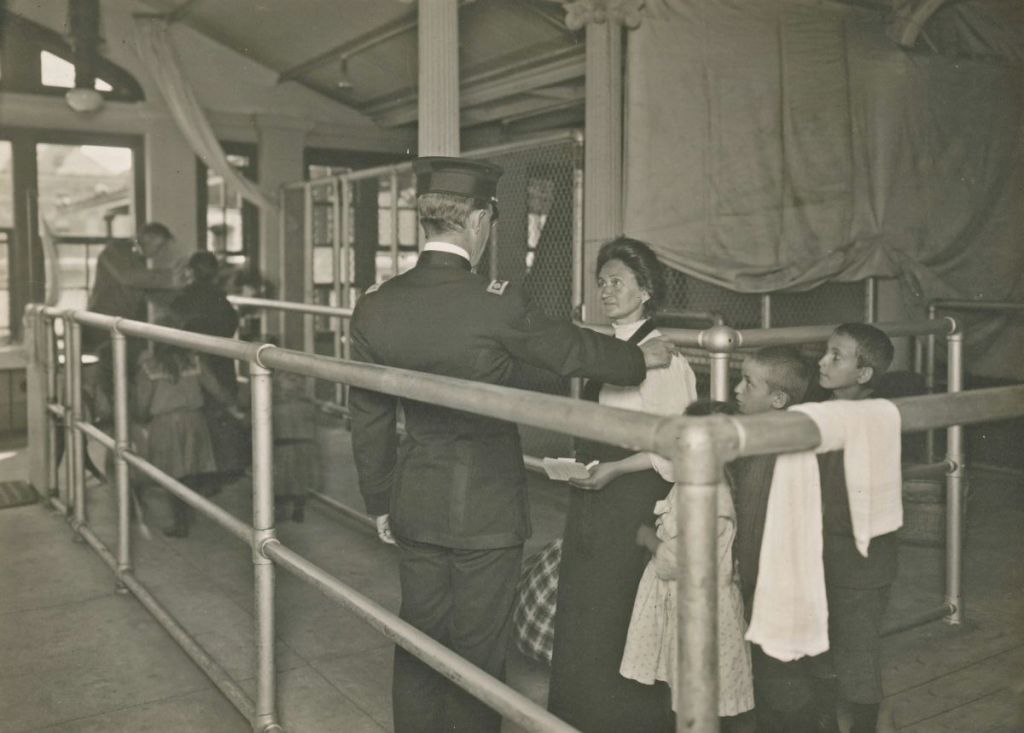
- The “Six-Second Physical”: On the “line,” doctors had only a few seconds to scan each person for over 60 symptoms of disease or physical/mental weakness.
- Chalk Marking: If a doctor suspected an issue, they would use a piece of white chalk to mark a code on the immigrant’s clothing. Common marks included:
- X: Suspected mental defect or “feeblemindedness”.
- E or Ct: Eye problems (specifically trachoma).
- H: Heart trouble.
- L: Lameness or back problems.
- Pg: Pregnancy (often flagged if traveling alone).
Key Medical Concerns:
The Public Health Service prioritized detecting contagious diseases and conditions that would prevent an immigrant from performing manual labor:
- Trachoma: This contagious eye infection was the most feared because it led to blindness and mandatory deportation. Doctors would use a buttonhook or their fingers to flip over an immigrant’s eyelids to check for the disease.
- Mental Fitness: Those marked with an “X” faced intelligence tests, such as solving wooden jigsaw puzzles (like the Feature Profile Test) to prove they were not “feebleminded”.
- Class Differentiation: First- and second-class passengers were typically examined in their cabins and spared the indignity of the Ellis Island line, as their wealth was seen as proof of health and stability.
Outcomes and Detention:
If an immigrant was “medically certified” with a condition, they were sent to the Ellis Island Hospital. While many were cured and eventually allowed to enter the United States, others faced heartbreaking decisions:
- Family Separation: If a child over 12 was rejected, they were sent back alone. If under 12, one parent had to return with them, often splitting families permanently.
- Economic Exclusion: Most exclusions were not for “loathsome diseases” but for minor defects like varicose veins or poor vision that might limit an immigrant’s ability to work.
https://www.history.com/articles/immigrants-ellis-island-short-processing-time
 FROM Putyatyntsi, Ukraine To ROCHESTER, New YORK
Leave a comment