
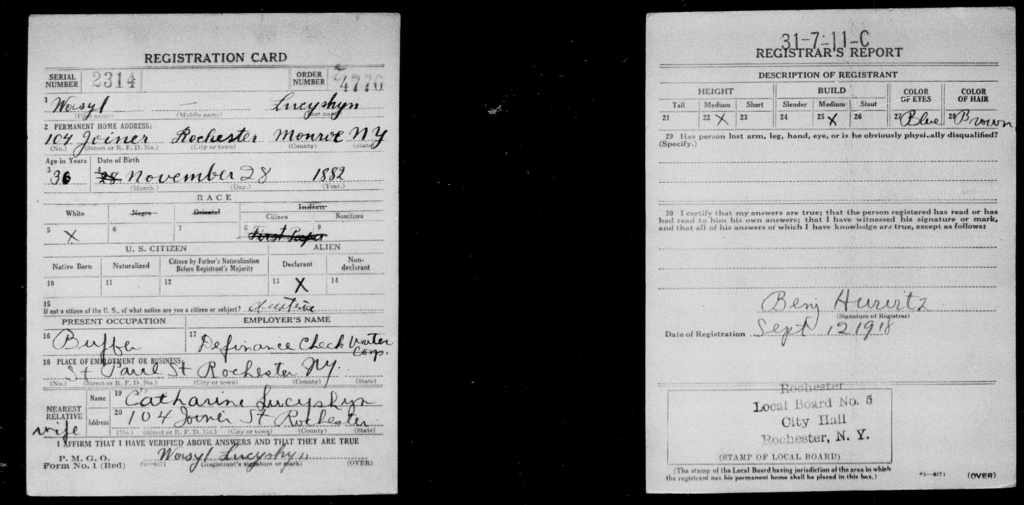
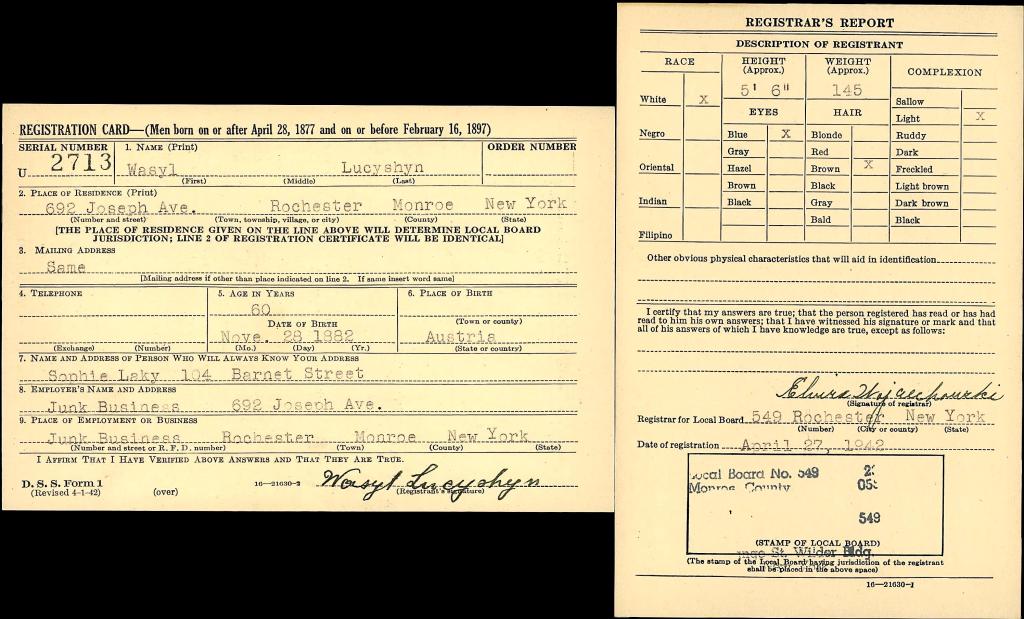
What is a “better life” worth? For Wasyl Lucyshyn and Catherine Wolak, the answer was everything. Wasyl left Putyatyntsi, Ukraine, in 1904, with Catherine following in 1905. Like thousands of others at the turn of the century, they sought the promise of Rochester, New York, trading the familiar for the unknown.
Wasyl and Catherine sculpted their new life out of nothing. Their daughter, Sophia, was born in March 1916, followed by their son, Joseph, in February 1919. Sophia and Joseph were children of the new world, raised in the neighborhoods of Rochester. The children were the embodiment of Wasyl and Catherine’s hopes — their living rewards for every sacrifice made along the way.
But history had a cruel way of demanding interest on the promise of a “better life”.
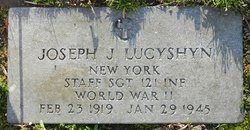
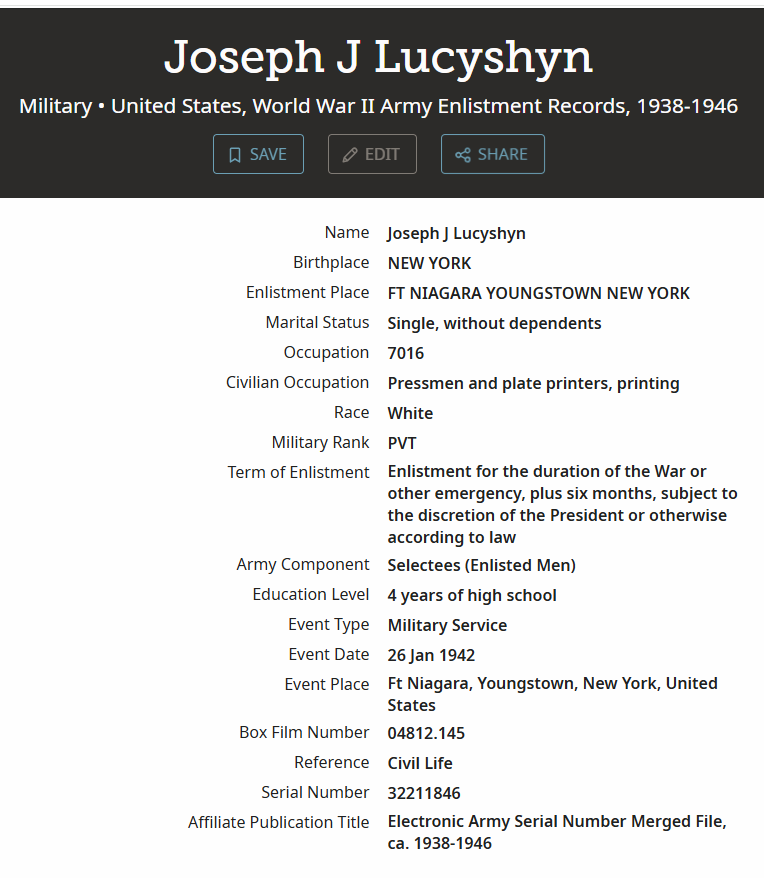
On January 26, 1942, Joseph walked into Fort Niagara in Youngstown, New York, and enlisted in the U.S. Army. He became a Staff Sergeant in the 121st Infantry Regiment, 8th Infantry Division — a unit that would see some of the most brutal fighting in the European theater during World War II.
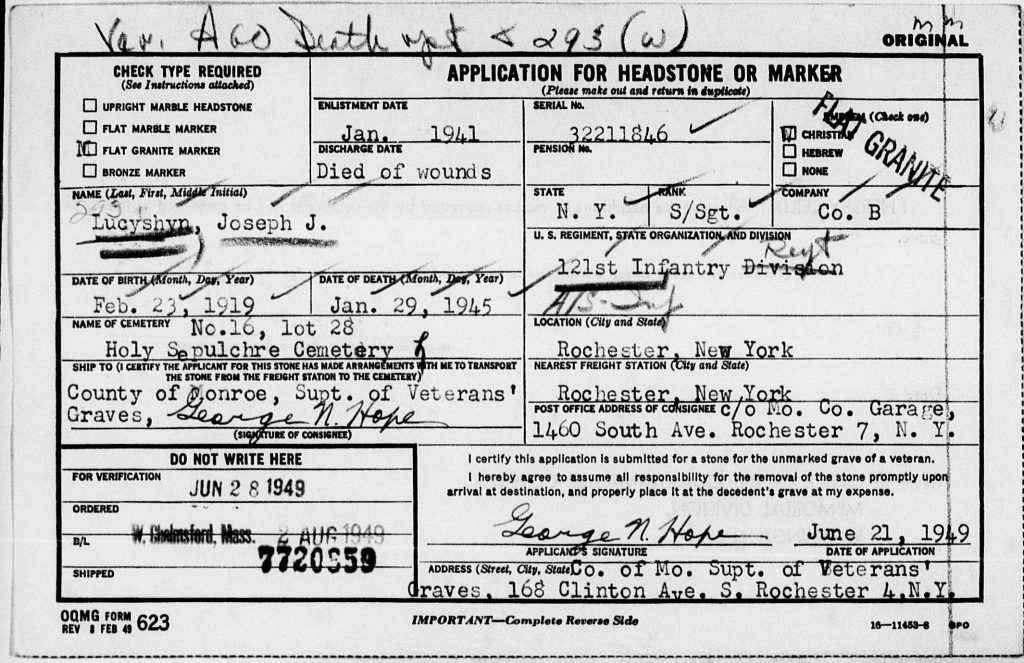
On January 29, 1945, in the final, frigid months of the war, Joseph gave his life. While the Battle of the Bulge had officially ended just days earlier, the cost was still being tallied in blood. He died of his wounds just months before the victory he helped secure, thousands of miles from the Ukrainian soil of his ancestors and the New York home his parents had built for him.
The irony is profound and painful: Wasyl and Catherine fled a land of uncertainty to find security; to ultimately give their only son to defend the country that took them in. Joseph was posthumously awarded the Bronze Star and Purple Heart, medals that eventually made their way back to Rochester—small, heavy tokens of a debt that could never be repaid.


Think about that for a second:
- Wasyl and Catherine arrived as strangers to the United States with a dream.
- They labored to build a life in their new country.
- They gave their son to the soil of a third country so that the second could remain free.
Today, Staff Sergeant Joseph Lucyshyn rests at Holy Sepulchre Cemetery in Rochester, New York. It is easy to speak of the “immigrant contribution” in terms of labor or economy. But this immigrant family’s story reminds us that the truest contribution is often a silent, empty chair at a dinner table. Wasyl and Catherine didn’t just come here to find a “better life”; they paid for ours.
The Wolak name also appears among the Putiatynce schoolchildren who signed a 1926 greeting to the United States: Greetings of Friendship from the Putiatynce School to the United States, 1926.


Leave a Reply