
In the late 19th and early 20th centuries, Putiatyńce transitioned from a period of high illiteracy to a time of organized public schooling. Galician Census documents confirm that the village had a school by 1880, but the broader regional data paints a picture of a population struggling for education.
Schooling in Putiatyńce
By the turn of the century (circa 1900), education in Putiatyńce was structured as follows:
Compulsory Education: Under Austro-Hungarian law, school was technically compulsory for children aged 6 to 12.
School Profile: In villages like Putiatyńce, these were typically “folk schools” (Volksschule) with 1 or 2 classrooms. Given the population of over 1,400 by 1900, the school was likely overcrowded, with hundreds of potential pupils per teacher.
Language of Instruction: In Eastern Galicia villages, instruction was usually in Ruthenian (Ukrainian), following liberal reforms in 1868 that allowed local communities to decide the language.
Literacy Rates
While specific literacy percentages for Putiatyńce aren’t in the summary tables of the Galician Census documents, they can be inferred from the Rohatyn District averages of that era:
General Literacy (Galicia, c. 1900)
Roughly 60–67% of the population was completely illiterate.
Gender Gap
Men were more likely to read and write than women (approx. 39% male literacy vs. 33% female literacy).
Greek Catholic Population
Literacy was often lower in rural Greek Catholic villages compared to urban centers like Rohatyn.
The “Luck” of Education
Primary Level: Attending the local school was the standard, but many children only attended seasonally due to the heavy demand for farm labor.
Secondary Level: For a child from Putiatyńce to attend a Gymnasium (secondary school) in Rohatyn, they had to be exceptionally “lucky” or from a wealthier family. In the entire region, there was often only one secondary school for every 150,000+ people.
Role of the Church: The village school often shared a close relationship with the Greek Catholic Parish (G.-k. Pf.). The local priest was frequently the most educated person in the village and a key driver of literacy.
By 1914, an estimated 320 residents of Putiatyńce — a village where the majority of the population was still illiterate and where formal schooling had only recently taken root — had crossed an ocean and resettled in Rochester, New York. The challenges they faced upon arrival were the direct product of the world described in the Galician census data: a peasant population with limited formal education, a minority language (Ruthenian/Ukrainian), and a Greek Catholic religious identity that did not map neatly onto American institutions.
1. The Journey Itself Was a Literacy Test
Before a single English word had to be spoken, illiteracy created obstacles at every stage of emigration:
Paperwork and permissions. Leaving Austria-Hungary required documentation — passports, exit permits, sometimes proof of completed military obligations. For a villager who could not read, every form had to be filled out by someone else: a priest, a village scribe, a steamship agent, or a moneylender — each of whom could charge for the service or exploit the traveler’s inability to verify what was written.
Steamship agents and “America letters.” Most emigrants from villages like Putiatyńce did not decide to leave on their own initiative. They followed word-of-mouth networks — a returned migrant, a relative’s letter read aloud by the parish priest, or a commissioned agent working for shipping lines (Hamburg-America, North German Lloyd) who profited from ticket sales and sometimes misrepresented conditions in America.
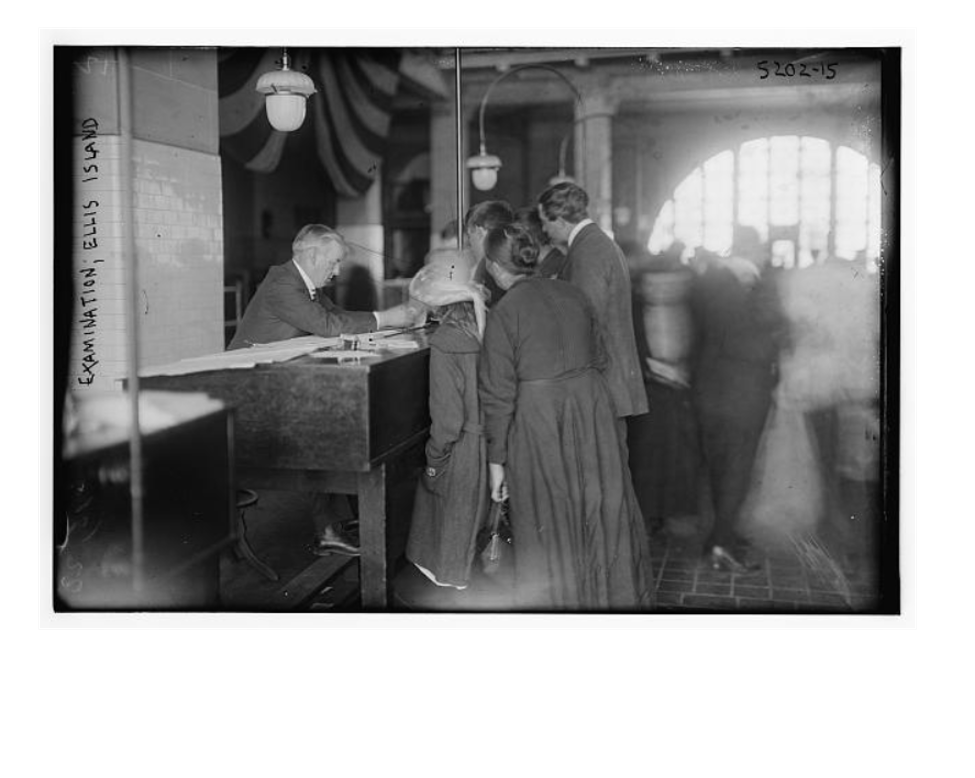
Ellis Island inspection. Arriving illiterate carried real legal risk. The U.S. literacy test for immigrants was debated through the 1890s–1910s and was finally enacted in 1917 — thankfully after most Putiatyńce arrivals had already entered — but even before then, illiterate immigrants were more likely to be pulled aside for further inspection, more vulnerable to misunderstanding medical or legal questions, and entirely dependent on an extraordinarily limited number of interpreters they had no way to evaluate.
2. Language Isolation on Arrival
Rochester in this period was not yet home to an organized Ukrainian/Ruthenian institutional network. According to local historical accounts, the first identifiable Ukrainian immigrant in Rochester, Evstachiv Makohon, arrived from the village of Pukiv in Rohatyn County — the same district as Putiatyńce — around 1901, and settled on Kelly Street between North Clinton and Hudson Avenues, where other western Ukrainian settlers soon followed. For years, there was no Ruthenian-rite church building in the city; worship was held in private homes, with priests traveling in periodically from Troy, Elmira Heights, Buffalo, and Auburn to perform baptisms, weddings, and liturgies.
For a Putiatyńce villager who spoke only Ruthenian (and possibly some Polish or German picked up from officialdom), this meant:
No street signage, employer instructions, medical forms, or legal documents were comprehensible without a translator.
Everyday transactions — renting a room, buying food, navigating streetcars — depended on finding a fellow villager, or a Polish-speaking neighbor with overlapping vocabulary, or a rare bilingual go-between.
Immigrants were frequently at the mercy of “runners” and labor agents who spoke enough Slavic languages to recruit workers, but who also had every incentive to shortchange them on wages, housing terms, or the true nature of a job.
3. Illiteracy Compounded Every Other Barrier
The census data on Putiatyńce and the Rohatyn district — roughly 60–67% total illiteracy, with literacy notably lower among women and among rural Greek Catholic villagers — meant that most arriving families could not:
Read employment notices, factory safety postings, or paycheck stubs.
Fill out naturalization paperwork, bank documents, or insurance policies without help.
Read English-language newspapers to understand civic life, labor conditions, or their legal rights.
Help their own children with schoolwork once those children began attending American public schools.
This last point created a particular strain within families: children often became literate in English years before their parents did, reversing the normal generational authority structure. A ten-year-old might be the only literate member of the household, responsible for reading mail, translating at the doctor’s office, or negotiating with a landlord — a heavy burden, but also often a source of pride and a path to early responsibility.
4. Labor: Hard, Dangerous, and Exploitable
Most Putiatyńce immigrants arrived with agricultural skills that had limited direct application in an industrial city like Rochester, which was then a center of garment manufacturing, shoemaking, optical goods (Bausch & Lomb), and photographic equipment (Eastman Kodak), along with nursery and horticultural work in the surrounding countryside. Without English or formal credentials, new arrivals were funneled into:
Unskilled factory and foundry work, often the most physically dangerous and lowest-paid positions.
Seasonal and day labor, including nursery/farm work outside the city, which echoed the agricultural rhythms of home but offered none of its stability.
Domestic service for women, frequently live-in positions that isolated them from the emerging Ruthenian community.
Illiteracy made workers especially vulnerable to wage theft, unsafe conditions they could not read warnings about, and contracts (when they existed) they could not review. Injury or death in industrial accidents left widows and children with little recourse, since navigating legal claims required literacy and English fluency they did not have.
5. The Parish as Lifeline
Just as the parish priest had been “the most educated person in the village” back in Putiatyńce, the church became the essential institution that made survival — and eventually stability — possible in Rochester. Because Rochester’s Ruthenian community had no dedicated building in the earliest years, community formation depended on organizing efforts:
In October 1908, Father Volodymyr Petriwskyj, traveling from Auburn, organized the Fraternity of St. Josaphat as a local branch of the Ukrainian National Association — a fraternal mutual-aid society originally founded in Pennsylvania in 1894 to provide insurance to families of miners killed on the job, later expanded to offer broader guidance and cultural support to immigrants adjusting to American life.
A dedicated church building, St. Josaphat’s on Remington Street, followed, and the congregation later moved to 305 Hudson Avenue in 1914.
These fraternal and religious institutions performed functions that literacy and English fluency would otherwise have required: pooling money for insurance and burial costs, vouching for members seeking work or credit, organizing schooling and translation help, and preserving religious and cultural identity through a liturgical calendar and language (Church Slavonic/Ruthenian) that connected immigrants directly back to the village they’d left.
6. Settlement Patterns and Mutual Aid
Illiterate, non-English-speaking immigrants overwhelmingly settled near people from the same or nearby villages — a pattern documented in Rochester’s own early Ukrainian settlement around Kelly Street, North Clinton, and Hudson Avenues. This clustering was not incidental; it was a survival strategy:
Shared language and dialect meant neighbors could translate for each other.
Village and kinship ties from Galicia carried directly over into who roomed with whom, who found whom a job, and who stood as godparent or witness at weddings.
Chain migration meant that later Putiatyńce arrivals had a landing point — someone from home who already knew the ropes of Rochester’s factories, landlords, and church.
7. Discrimination and Status
Ruthenian/Ukrainian Greek Catholic immigrants occupied an ambiguous position in early-1900s American ethnic and religious hierarchies. They were often lumped in by native-born Americans with other “Slavic” or “Hunkie” laborers regardless of specific origin, and their married clergy and Eastern liturgical rite caused friction with the dominant Roman Catholic hierarchy, which sometimes refused Ruthenian priests use of Latin-rite churches. Internally, the community was also split — some identified as Ukrainian, others as “Rusyns,” and a further division existed between those who remained Greek Catholic and a minority drawn toward Russian Orthodoxy — divisions rooted in exactly the religious and national politics playing out simultaneously back in Galicia.
8. The Long Road to Literacy and Belonging
For the adults who arrived from Putiatyńce already illiterate, full English literacy often never came — night schools and settlement-house classes existed in cities like Rochester, but between factory shifts and raising children, attendance was a luxury few could sustain. Progress toward integration instead came generationally:
Children attended American public schools and became fluent, literate English speakers, often within a single generation of parents who signed documents with an “X” or a mark rather than a signature.
The church, fraternal lodges (like the Ukrainian National Association branch), and Ukrainian-language press (such as the newspaper Svoboda, founded in 1893 and still in print) gave first-generation adults a way to stay informed and civically engaged without needing English literacy.
Naturalization, when pursued, typically required outside help — a lawyer, a fraternal-society officer, or a literate adult child — to complete.
A note on sources: The Rochester-specific details above (Makohon’s arrival and Kelly Street settlement, the 1908 founding of the St. Josaphat fraternity, the church’s move to Remington Street and later Hudson Avenue) come from Rochester local history research and James D. Bratush’s A Historical Documentary of the Ukrainian Community of Rochester, New York, cross-referenced with general Ukrainian-American immigration scholarship (Myron Kuropas’s The Ukrainian Americans: Roots and Aspirations, 1884–1954.)
By 1926 the village had a three-class public school. See the signatures of its pupils and teachers in Greetings of Friendship from the Putiatynce School to the United States, 1926.


Leave a Reply